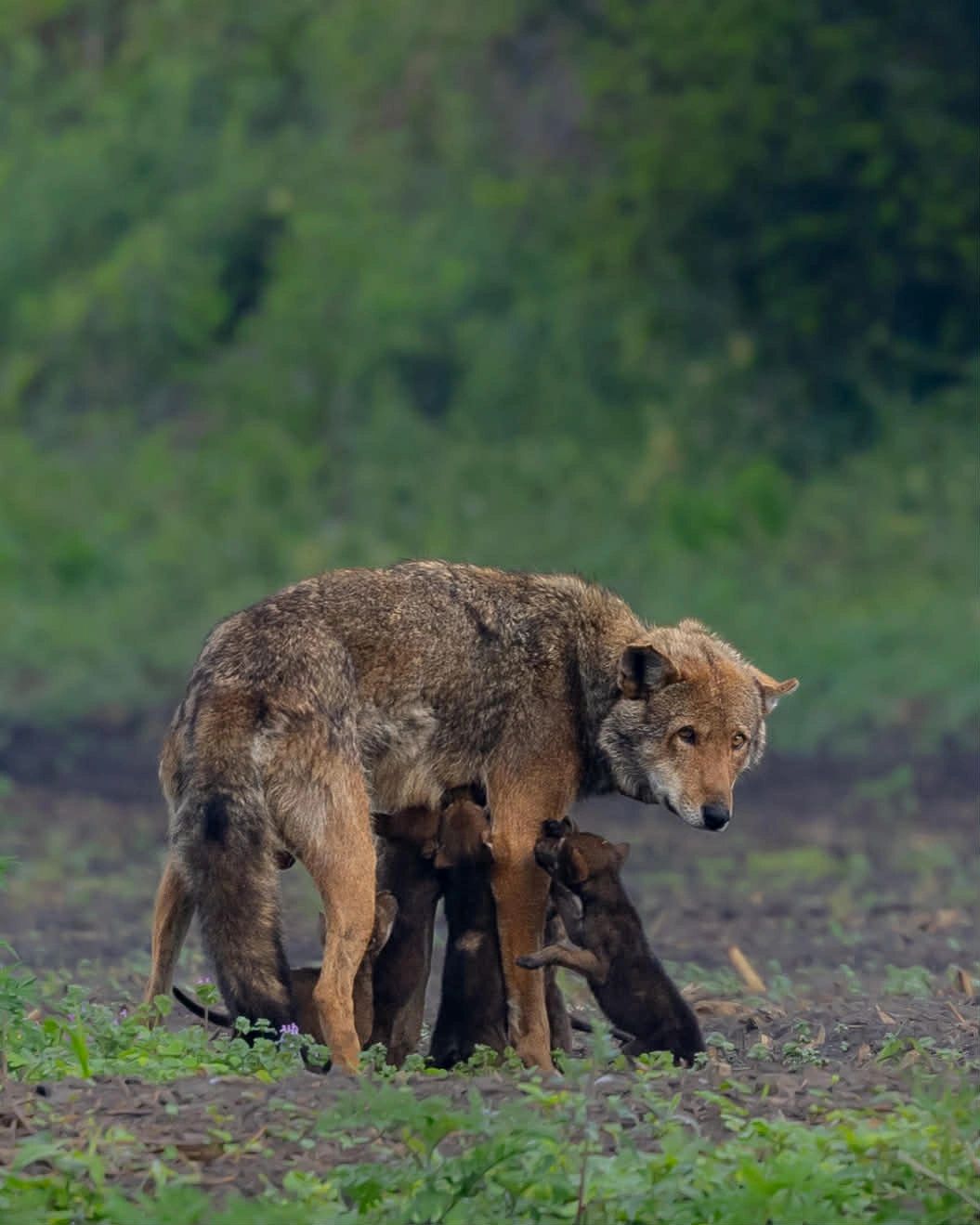
The Red Wolf and The Raven
The Cherokee people call the red wolf the “Red Grandfather” (Gigage-Unidoda) and honor them as teachers and protectors of balance in the world. That sense of balance is exactly what has been lost in the Appalachian Mountains since the red wolf disappeared.
Why Red Wolves Matter
Red wolves are more than endangered wolves they are keystone species, which means the health of the whole forest depends on them. When red wolves are present, they:
- Keep smaller predators in check. Without wolves, raccoons, opossums, and coyotes become too numerous. These animals raid bird nests and disrupt the balance of the forest. In North Carolina, when red wolves declined, raccoon sightings doubled.
- Strengthen deer herds. Wolves hunt the weak and sick, which keeps deer healthy and prevents overgrazing. This allows wildflowers, shrubs, and young trees to grow back.
- Help forests and rivers recover. When prey animals move more carefully, plants like willow and aspen can grow. Over time, this supports beavers, fish, and birds — making the whole ecosystem richer and more diverse.
As biologist Chris Gentile once said:
“Anytime you lose a piece of that puzzle, it becomes a weaker system… [restoring one is] like restoring one of those missing pieces.”
What Happens Without Them
A recent study in North Carolina showed what happens when wolf numbers drop too low. Within just a few years, bobcats, bears, and especially raccoons surged in number. This “mesopredator release” puts songbirds, turtles, and even farm fields at risk. Deer also increase without wolves to balance them, which can strip away young plants and weaken the forest. In short: when the red wolf is missing, the whole system begins to wobble.
Lessons from the Past
In the 1990s, scientists tried to bring red wolves back to the Great Smoky Mountains. The effort was challenging — some pups didn’t survive, and others mixed with coyotes. Though that project ended, it taught us valuable lessons. Today, about 18 adults live wild in North Carolina, alongside over 200 in special breeding programs. These efforts give hope that one day red wolves may return to the wider Appalachian Mountains.
Looking Ahead
The story of the red wolf is about more than one species. It’s about learning that when even a single piece of nature’s puzzle is missing, the balance of life can fall apart. By protecting and restoring wolves, we are also protecting birds, forests, rivers, and the next generation who will inherit this land.
Hope for the Red Wolf
Every new litter of Red Wolves born in the wild is cause for celebration.
In the spring of 2025, four litters brought 16 new pups onto the landscape of eastern North Carolina, including litters at Alligator River National Wildlife Refuge. By January 2026, biologists had confirmed that 10 of those pups had survived and were growing into young wolves.
That number may sound small, but for the Red Wolf, it is incredibly significant. Today, only one wild population remains anywhere in the world, living in eastern North Carolina. With fewer than 30 Red Wolves estimated in the wild, every successful litter represents new hope for the survival and recovery of the species.
These pups are more than adorable new arrivals—they are part of the future of the Red Wolf.