The Gallery
The Man From Thurmond
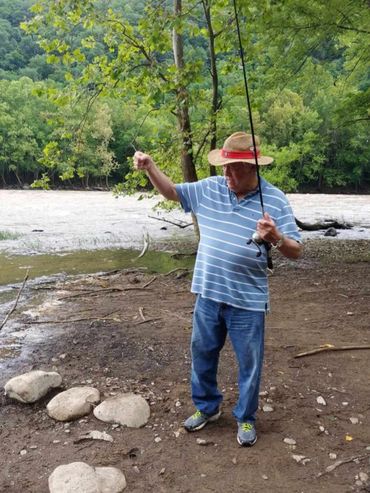
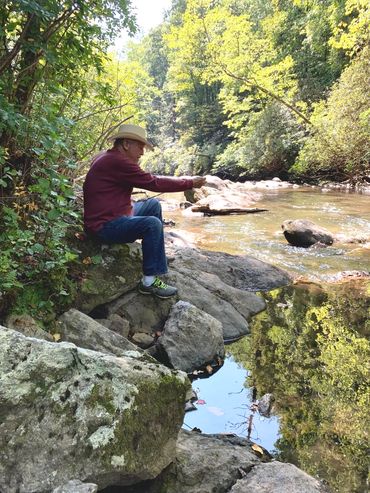
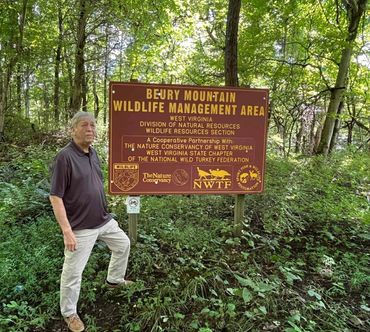
This piece is deeply personal, a way to honor the memory of my father, Jim Kelly, whom I lost at Christmas in 2024. He was born in Thurmond, West Virginia, in a house that sat along the train tracks. Shaped by the river that carved the gorge, he grew up alongside it. The woods and mountains were where he felt most at peace, a sense of belonging he passed down to his youngest daughter.
The work itself is inspired by the last fishing trip my father and I shared. When I was a child, he took me fishing; as an adult, I had the rare chance to return the gift. I brought him to my favorite rivers and the quiet places that had become mine over the years. It was a simple day, but a sacred one, a moment of reversal, where I guided him through the landscapes that shaped me, just as he once guided me.
Losing my father gave my art a voice: Appalachia. Fueled by grief and a longing to create something in his memory, everything I make is rooted in the love I have for him.
Bringing my art and stories back to the place where he began feels like the truest way to honor my dad.

James William Kelly (The Man From Thurmond) May 1946-December 2024



The Red Wolf and The Raven
The Cherokee people call the red wolf the “Red Grandfather” (Gigage-Unidoda) and honor them as teachers and protectors of balance in the world. That sense of balance is exactly what has been lost in the Appalachian Mountains since the red wolf disappeared.
Why Red Wolves Matter
Red wolves are more than endangered wolves they are keystone species, which means the health of the whole forest depends on them. When red wolves are present, they:
- • Keep smaller predators in check. Without wolves, raccoons, opossums, and coyotes become too numerous. These animals raid bird nests and disrupt the balance of the forest. In North Carolina, when red wolves declined, raccoon sightings doubled.
- • Strengthen deer herds. Wolves hunt the weak and sick, which keeps deer healthy and prevents overgrazing. This allows wildflowers, shrubs, and young trees to grow back.
- • Help forests and rivers recover. When prey animals move more carefully, plants like willow and aspen can grow. Over time, this supports beavers, fish, and birds — making the whole ecosystem richer and more diverse.
As biologist Chris Gentile once said:
“Anytime you lose a piece of that puzzle, it becomes a weaker system… [restoring one is] like restoring one of those missing pieces.”
What Happens Without Them
A recent study in North Carolina showed what happens when wolf numbers drop too low. Within just a few years, bobcats, bears, and especially raccoons surged in number. This “mesopredator release” puts songbirds, turtles, and even farm fields at risk. Deer also increase without wolves to balance them, which can strip away young plants and weaken the forest. In short: when the red wolf is missing, the whole system begins to wobble.
Lessons from the Past
In the 1990s, scientists tried to bring red wolves back to the Great Smoky Mountains. The effort was challenging — some pups didn’t survive, and others mixed with coyotes. Though that project ended, it taught us valuable lessons. Today, about 18 adults live wild in North Carolina, alongside over 200 in special breeding programs. These efforts give hope that one day red wolves may return to the wider Appalachian Mountains.
Looking Ahead
The story of the red wolf is about more than one species. It’s about learning that when even a single piece of nature’s puzzle is missing, the balance of life can fall apart. By protecting and restoring wolves, we are also protecting birds, forests, rivers, and the next generation who will inherit this land.

Forest Guardian
Inspired by my time living in Japan and its traditions of forest guardians and spirits, this artwork imagines a protector of the Appalachian mountains. His great antlers cradle the forest itself, sheltering every bird, plant, insect, and fungus that depends on these woods to survive.
Like walking through the forest, if you look closely you’ll discover many lives tucked into the details. Hidden in this piece are 8 native plants, 10 animals, and 2 fungi—each one part of the balance that keeps the mountains thriving.
Can you spot them all?
Scroll down to learn more about some of the flora and fauna featured in this work and to see an entire list of all the animals, plants, and fungi.

Every creature and plant play a vital part
White-footed Mouse
White-footed Mouse
White-footed Mouse

By consuming fungi, they play a role in maintaining healthy trees helping forest stay strong.
Carolina Lily
White-footed Mouse
White-footed Mouse
Rare plants like the Carolina lily can serve as an indicator of the health of an ecosystem. This makes them valuable for scientific study and conservation efforts
Bumble Bee
White-footed Mouse
Copes Gray Tree Frog
Bumble bees are vital pollinators of native wildflowers in Appalachia, ensuring plants can reproduce and thrive.
Copes Gray Tree Frog
Ruby Throated Hummingbird
Copes Gray Tree Frog
They help control insects like mosquitoes and serve as food for snakes and birds. Because they’re sensitive to habitat changes, they also signal when the ecosystem is out of balancechanges to their habitat affecting them first
Ruby Throated Hummingbird
Ruby Throated Hummingbird
Ruby Throated Hummingbird
Ruby Throated Hummingbirds are vital to the Appalachian ecosystem primarily as effective pollinators. Helping to reproduce various native wildflowers and flowering vines like trumpet creeper and cardinal flower which in turn support many other forest species.
Passion flower
Ruby Throated Hummingbird
Ruby Throated Hummingbird
Passion flower (or as we call them in the South Maypops) vital for the Gulf fritillary butterfly, which depends on it as its only host plant for larvae.
Did you find them all?

Here's the complete list of hidden life inside Forest Guardian
Animals:
- White footed Mouse
- Copes Gray Tree Frog
- Scarlet Kingsnake
- Raven
- Eastern Pondhawk Dragon Fly
- Ruby Throated Hummingbird
- Orb Weaver Spider
- Swallowtail Butterfly
- Monarch Butterly Caterpillar
- Bumble Bee
Plants
- Passion Flowers (Maypops)
- Water Lilies
- Carolina Lilies
- Lily of the Valley (flowers and berries)
- Pokeweed
- Rhododendron Leaves
- Witch Hazel
- Oak Leaves
Fungi
- Honey Mushrooms
- Chicken of the Woods
The Corvine and the Vixen
In this piece, I wanted to capture the haunting beauty of Appalachia in autumn — a season filled with both splendor and shadows.
Black foxes are a rare occurrence, born from a genetic mutation. I paired this little vixen with a raven, her unlikely companion. In the wild, foxes and ravens are often at odds, ravens steal food from foxes and even chase them away. Wolves, on the other hand, sometimes share a unique, cooperative bond with ravens.
But here, the vixen and raven are friends. Perhaps the raven was drawn to her dark coloring, recognizing something of itself in her? Or perhaps it is simply a story of two outcasts finding kinship.
Together they share a secret conversation among the fallen leaves, ghost pipes, chicken of the woods, and the dark beauty of black columbine flowers, glowing against a fiery autumn sunset.
What do you think they are talking about?

The Wampus Cat
Have you ever heard a woman's cry in the woods? In the Appalachias it could be the Wompus Cat. Described by some as a mountain lion with six legs, others say a woman with a mask on with supernatural strength. However you describe this Appalachian cryptid there is one thing for certain: behind it lies a good story.

The Buck Moon
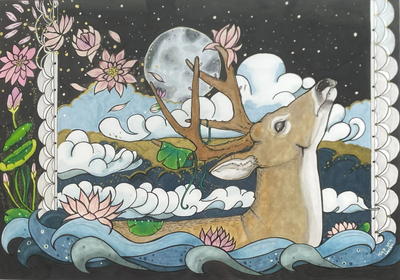
The Buck Moon will be the next story in The Lost Fables of Appalachia series. This tale, named for the time of year when young deer begin to grow their antlers, will be about a young buck named Roscoe. He has big dreams of becoming the king of the forest and to do that all he needs to do this is to pluck the moon from the sky with his antlers.
In the Appalachian forests anything is possible, from mountain magic, cunning trickery, and lessons learned. Stay tuned to read about Roscoe in The Buck Moon.
Autumn Snack: The Gray Fox in the Persimmon Tree
This illustration became the very first glimpse of Jeter Gray Fox—though I didn’t realize it at the time. The story already lived in my head, unwritten but fully alive, when I found myself sketching a gray fox perched among the branches of a persimmon tree.
I’ve always loved these trees in late autumn and winter, their bare, twisting limbs dotted with bright fruit like lanterns against the season’s gray. The colors seemed made to complement the fox’s unique silver coat. Around the border, I wove the tree’s flowers and leaves, a reminder of the cycle of seasons and the way nature tells its stories in layers.
When I finished, I fell in love with the piece. I knew then that this was Jeter, and that this fox would one day step forward to become the cover of my book.

Jeter and Basil Hiding in Pokeweed
This illustration from The Tale of Jeter Gray Fox captures Basil and Jeter in a mischievous moment, spying food with mouths slightly open and eyes wide. The two foxes crouch in a pokeberry patch, sizing up their prey with equal parts curiosity and cunning.
Jeter is a gray fox, native to the Appalachian Mountains. Unlike most foxes, gray foxes can climb trees thanks to their semi-retractable, hooked claws and rotating wrists. You’ll often find Jeter napping in the branches—though don’t tell him I gave away his secret. He prefers humans not know about his climbing skills!
Basil, on the other hand, is a red fox. He carries a trace of Europe in his voice—likely England, though it can be tricky to tell when conversing with forest creatures. Basil is polite, a touch too trusting at times, and always appreciative of compliments. If you happen to see him, be sure to admire his striking tail. He’ll be delighted. Basil’s favorite resting spot is the top of a sun-warmed tree stump.

Forest Predators
This illustration from The Tale of Jeter Gray Fox shows just how many creatures consider chickens a tempting meal. An owl waits silently with sharp talons ready, a black bear looms with heavy paws, an opossum and a raccoon creep forward with mischief in their eyes, and a snake coils in quiet patience. Each one strikes a pose as if about to spring right off the page. Oh dear—life in the barnyard is never easy when so many predators are lurking!
